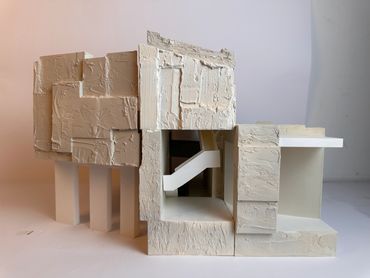
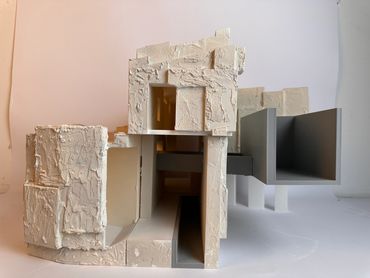
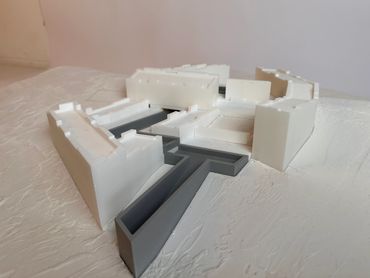
The Trinity Bathhouse is conceived as a civic bathing facility embedded within the landscape of the Trinity River, drawing from global traditions of collective bathing while responding directly to the site’s topography and hydrological conditions. Positioned between the Trinity River linear park and the eastern edge of Harold Simmons Park, the project operates as both a destination for ritualized bathing and a sectional extension of the terrain itself
The design process began through a sectional approach, using the bathhouse program to study vertical relationships between water, ground, and enclosure. This method generated a building form that stretches horizontally along the north–south axis of the site while establishing strong vertical connections between interior spaces and the surrounding landscape. A central, above-grade lobby anchors the composition, acting as a civic threshold that mediates between outdoor pools, interior bathing spaces, and the river beyond.
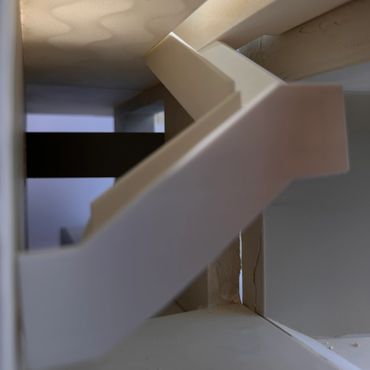
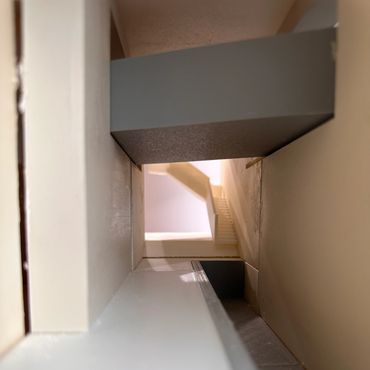
Materially, the bathhouse is envisioned as a megalithic limestone structure, drawing inspiration from the work of Anne Holtrop and the ruin-like presence of projects such as El Gran Acuario. The massing reads as carved rather than assembled, with deeply recessed openings and heavy parapets reinforcing the building’s monumental character. The primary entry sequence is articulated through an elongated stair derived from the Piazza del Campidoglio, emphasizing procession and compression before arrival.
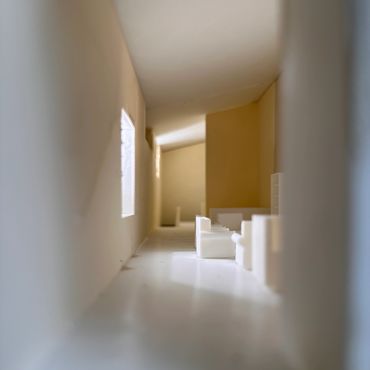
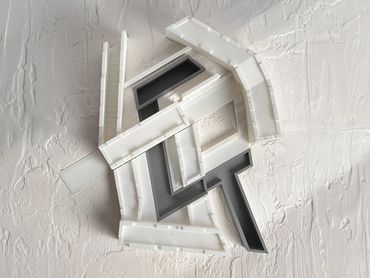
Despite its monumental exterior, the interior is ordered through an enfilade system, establishing clear axial movement and visual continuity across bathing spaces. This organizational logic allows visitors to move intuitively through changing rooms, sauna and steam spaces, hammam-style pools, and contemplative areas while maintaining constant orientation. The enfilade extends outward into the landscape, where a series of linear pools traverse the site and pass directly through the building, reinforcing the project’s sectional logic and connection to water
Outdoor bathing spaces are arranged as parallel, offset pools that spill into one another, maximizing sunlight exposure and encouraging fluid movement between interior and exterior environments. Throughout the project, circulation, water, and structure align to create a cohesive spatial experience oriented toward the Trinity River, promoting a slow, ritualized progression through architecture, landscape, and water.